Theoretical Astrophysicist · Carnegie Observatories

Andrew Benson

I am a Staff Scientist at the Carnegie Observatories. My research is focused on understanding the nature of dark matter and the process of galaxy formation — combining analytic models, numerical simulations, and large astronomical surveys.

Andrew Benson

Research focus

What I work on

Three threads tie my research together: building a coherent theoretical model of galaxy formation; constraining the microphysics of dark matter; and designing the synthetic universes that next-generation surveys need to interpret their data.

Recent work

Selected recent papers

These cards are rebuilt automatically from my NASA ADS library on a weekly schedule. Summaries and figures are generated from the paper itself.

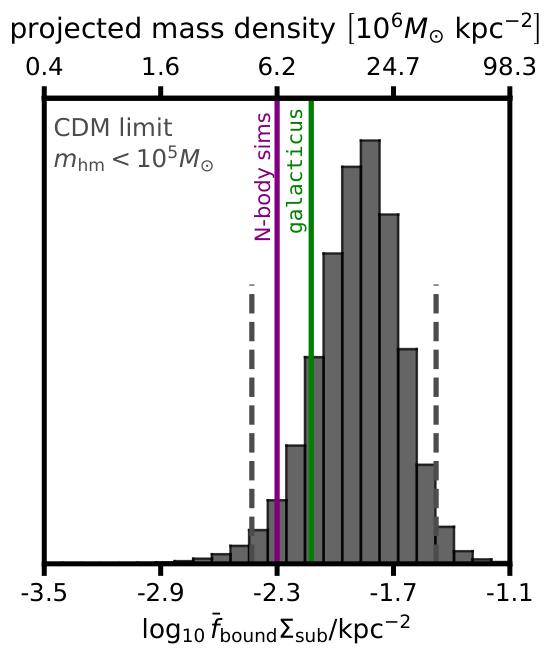
Figure from Advancing stellar streams as a dark matter probe ─ I: effects of subhalo density profile

Monthly Notices of the Royal Astronomical Society 2026

Advancing stellar streams as a dark matter probe ─ I: effects of subhalo density profile

Menker, Paul, A. Benson, et al.

This research develops a more accurate model for predicting gaps in stellar streams caused by dark matter substructures, finding that the number of expected gaps is significantly higher than previously estimated. This advancement enhances the potential of stellar streams as tools for probing dark matter properties.

Figure from JWST Lensed Quasar Dark Matter Survey V: Measuring the minimum halo mass with strong gravitational lensing

arXiv e-prints 2026

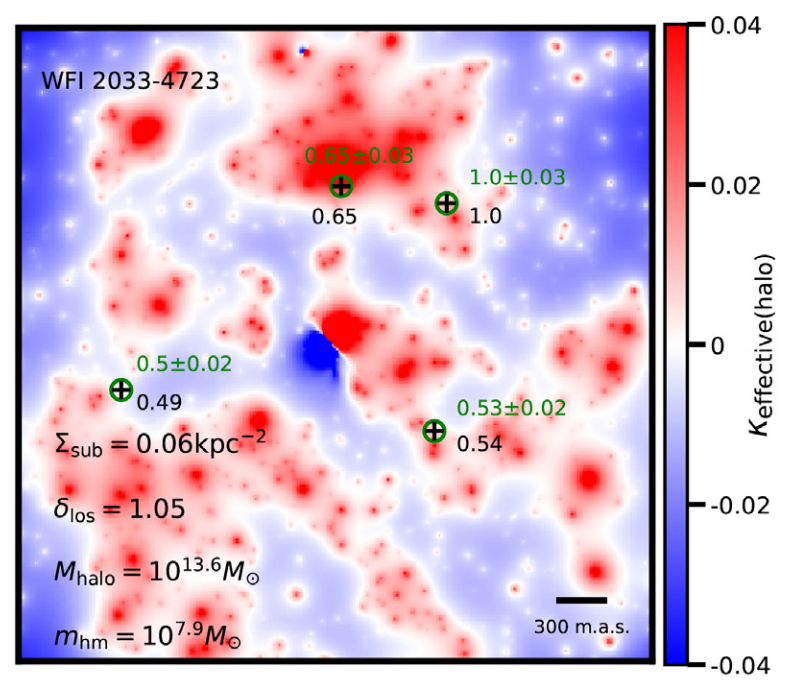
JWST Lensed Quasar Dark Matter Survey V: Measuring the minimum halo mass with strong gravitational lensing

Nierenberg, A. M., A. Benson, et al.

This study establishes a new upper limit on the minimum halo mass in cold dark matter models, finding it to be less than \(10^{8.3}\) solar masses using strong gravitational lensing data. The results indicate that future observations of more lensed quasars could significantly refine our understanding of dark matter structures in the universe.

Figure from Bypassed Core Formation in Milky Way-Mass SIDM Halos: Implications for the Local Group Past-Pericenter Scenario

arXiv e-prints 2026

Bypassed Core Formation in Milky Way-Mass SIDM Halos: Implications for the Local Group Past-Pericenter Scenario

Carton Zeng, Zhichao, A. Benson, et al.

This study reveals that self-interacting dark matter (SIDM) halos around the Milky Way and M31 can bypass typical core formation, leading to increased central densities during close encounters. The findings highlight a structural dichotomy, where the compact stellar components are resilient to tidal disruptions, while the diffuse stellar halo is more vulnerable, emphasizing the complex dynamics of galaxy interactions in the Local Group.

Figure from Stellar Mass Growth in the First Galaxies: Theory and Observation

The Astrophysical Journal 2026

Stellar Mass Growth in the First Galaxies: Theory and Observation

Dressler, Alan, A. Benson, et al.

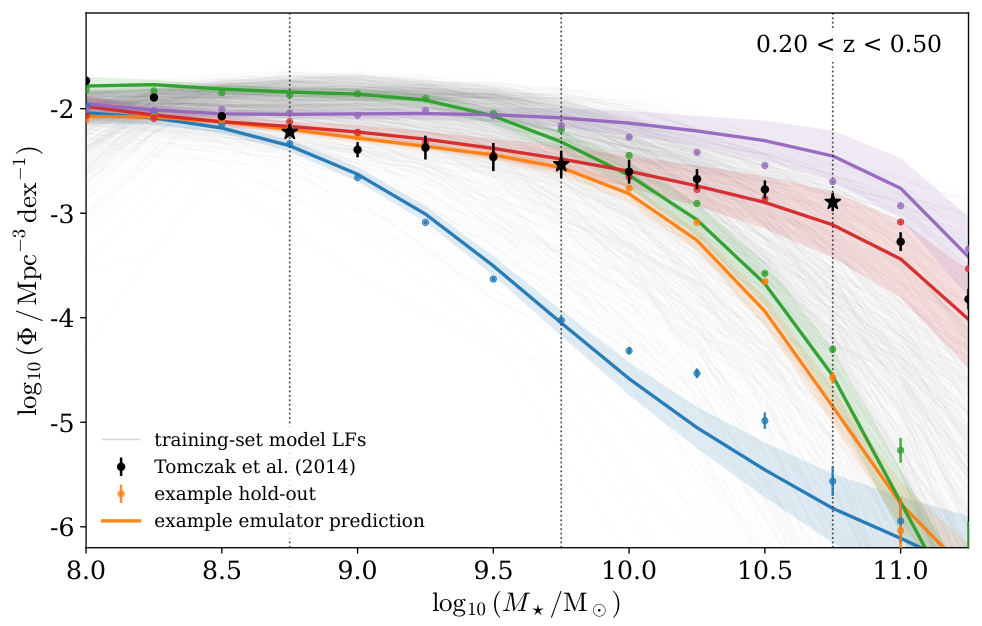
This study finds strong agreement between observed stellar mass growth in early galaxies and predictions from the GALACTICUS model, highlighting the importance of stellar mass as a fundamental measure in galaxy formation. The results suggest that significant in situ growth and mergers contributed to stellar mass increases during the early universe, challenging previous claims about the dominance of star formation bursts.

Figure from The THESAN project: environmental drivers of Local Group reionization

Monthly Notices of the Royal Astronomical Society 2026

The THESAN project: environmental drivers of Local Group reionization

Zhao, Yu, A. Benson, et al.

The THESAN project reveals that the timing of cosmic reionization in Local Group analogues is significantly influenced by their surrounding environment, with denser regions ionizing earlier. This research enhances understanding of how large-scale structures affect reionization, providing insights into the early histories of galaxies like the Milky Way.

Figure from A Comparison of Galacticus and COZMIC WDM Subhalo Populations

The Open Journal of Astrophysics 2026

A Comparison of Galacticus and COZMIC WDM Subhalo Populations

Lonergan, Jack, A. Benson, et al.

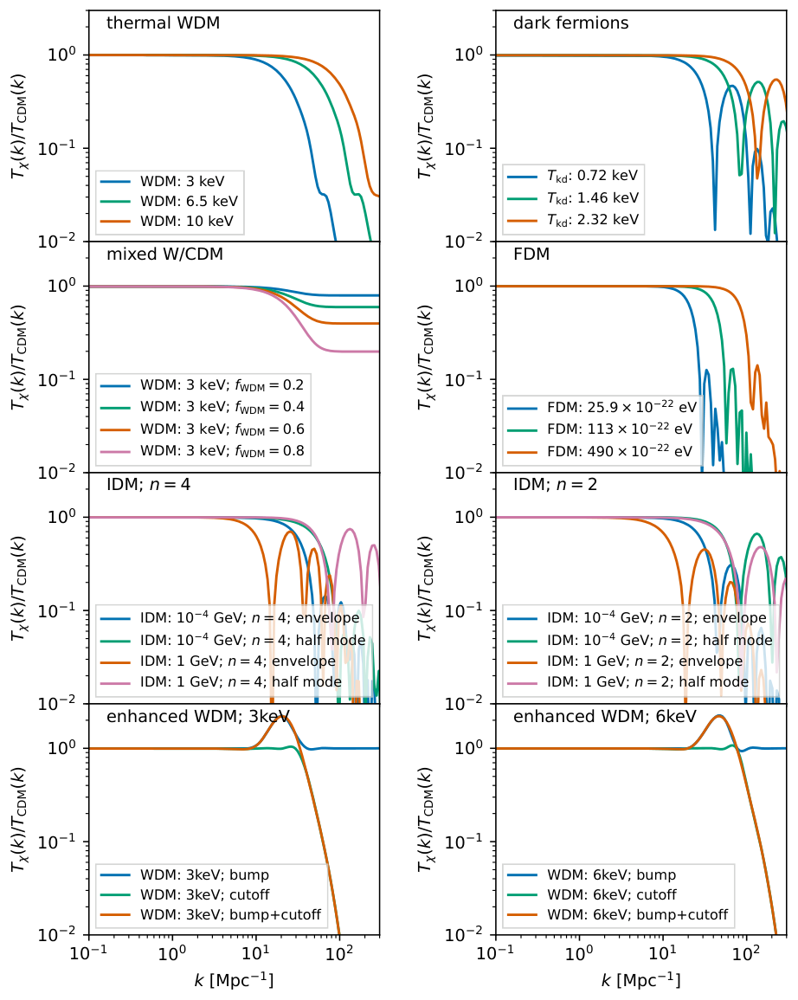
This study compares warm dark matter subhalo populations from two different modeling approaches, finding that both predict a reduction in low-mass subhalos as WDM particle mass decreases. The results indicate that the semi-analytic model Galacticus can effectively replicate the distributions observed in N-body simulations, providing a valuable tool for further research on warm dark matter's effects in astrophysics.

See all recent papers →

Open source

Galacticus

Most of my modeling work happens inside Galacticus, an open-source semi-analytic model of galaxy formation that I wrote and continue to develop. It's used by groups around the world to study dark matter, galaxy evolution, and forecast observations for upcoming surveys. See the full software stack →